Starting an epoxy flooring business is a great way to get into a high-margin industry without the long timelines or overhead of traditional construction businesses. Demand is growing as more homeowners invest in durable flooring solutions, and the barrier to entry is manageable for contractors willing to take a focused, strategic approach.
The opportunity is real, but you can’t simply buy equipment and start offering services to be successful. The contractors who build profitable epoxy flooring businesses devote the proper attention to understanding all aspects of epoxy flooring, refining their processes, and positioning themselves as specialists from day one.
This step-by-step guide walks through exactly how to launch, grow, and scale an epoxy flooring business in today’s market.
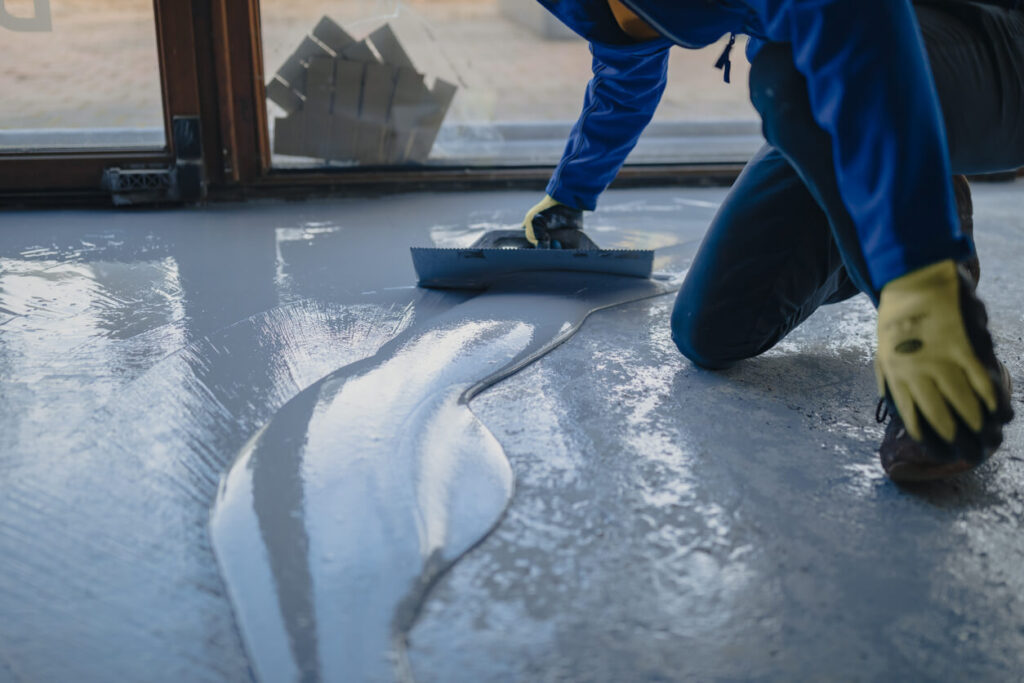
Step 1: Understand the Market Opportunity
Before investing in tools or materials, it is important to understand why epoxy flooring is in demand and where the money is being made.
Residential projects continue to lead growth, especially in garages, basements, and interior living spaces. Homeowners are looking for flooring options that are both long-lasting and attractive. At the same time, commercial demand remains strong for warehouses, retail spaces, and showrooms.
The most important thing to know is that epoxy flooring is no longer a niche service. It is an increasingly common upgrade, and customers are willing to pay for good work. This creates an environment in which skilled contractors can charge premium prices rather than compete on low bids.
If you position yourself early on as a specialist, you can get better jobs and not be grouped with general contractors who only offer basic services.
Step 2: Build Your Skill Set First
One of the fastest ways to fail in this industry is to underestimate the importance of proper installation. Epoxy flooring requires precision, timing, and a deep understanding of surface preparation.
Investing in training or hands-on experience should be your first priority. Whether through mentorship, courses, or working with experienced crews, learning the correct process will save you from costly mistakes later.
Customers expect flawless results. Your reputation can suffer quickly if your finishes have bubbles, peeling, or unevenness. By learning the basics early on, you can make your business look reliable and professional right away.
Step 3: Invest in the Right Equipment
Your tools have a direct effect on how well you work, how good your work is, and how quickly you can grow.
Essential tools include a concrete grinder, a dust collection system, mixing equipment, application tools, and safety gear. High-quality surface preparation equipment is especially important because it determines how well the coating bonds to the concrete.
Initial equipment investment typically ranges from $10,000 to $30,000. While this may seem significant, it enables you to complete jobs faster, reduce errors, and justify higher pricing.
This investment is like the base of your business. The better your tools are, the more consistent your results will be, and the easier it will be to grow.
Step 4: Choose High-Performance Materials
Not all epoxy products are the same. The materials you choose will affect how the final product looks, how long it lasts, and how happy your customer is.
Advanced coatings and high-solids epoxy systems work better and last longer. They may cost more up front, but they lower the chance of failure and make it easier for you to do high-quality work.
When you work with a trusted supplier like ASTC Global, you can be sure that everything will be the same and that you will get help when you need it. You can also take on more difficult projects with confidence because you have access to reliable materials and technical advice.
Using high-quality products also strengthens your sales process. When you can confidently explain the benefits of your system, customers are more likely to invest in your service.
Step 5: Set Up Your Business Properly
Treating your epoxy flooring business like a real company from the beginning gives you a significant advantage.
This includes registering your business, getting the right licenses, getting insurance, and building a professional brand. Even if you start small, showing customers that you are a real business will help them trust you.
Your brand should show that you are an expert in your field and that your products are of high quality. A clear business name, a professional logo, and consistent messaging will help you stand out in a crowded market.
You can avoid problems later and set yourself up for long-term growth by doing these things early.
Step 6: Develop a Profitable Pricing Strategy
Come up with a pricing strategy that works for you. Many new contractors have trouble with pricing. Cutting prices to get jobs may help at first, but it will quickly limit your ability to grow.
Instead, focus on value-based pricing. Residential epoxy flooring is commonly priced between $6 and $15 per square foot, depending on the system and complexity. You can charge even higher amounts for premium finishes.
You want to charge for your services in a way that reflects their quality, covers your costs, and leaves you with a good profit. Knowing how much your materials, labor, and overhead costs will help you set prices with confidence.
Customers who care about quality will pay for it. Set up your service so you don’t have to compete solely on price.
Step 7: Land Your First Jobs Quickly
Getting your first few jobs is often the hardest part. At this point, you want to build momentum and make a portfolio.
Use your current network to get started. Reach out to friends, family, and people you know in your area. You can also get experience and testimonials by offering a low rate for your first projects.
Focus on getting great results and keeping track of your work. High-quality photos and before-and-after transformations are great marketing tools that will help you get new clients.
It is much easier to build trust and get bigger jobs once you have finished a few projects.
Step 8: Build a Strong Online Presence
In 2026, having a strong online presence is one of the most important things you can do. Homeowners look online before making decisions, and how visible you are directly affects how many leads you can get.
A professional website that is optimized for local search will help you get in front of potential customers. You can make sure that your business shows up in local searches by listing it on platforms like Google Business Profile.
Customer reviews are very important for building trust. If you ask happy customers to leave reviews, it can greatly increase your conversion rate.
Finally, don’t forget about social media. Posting pictures, videos, and behind-the-scenes content from your projects shows you know what you’re talking about and keeps your business in people’s minds.
Step 9: Create a System That Works Every Time
The difference between a side hustle and a scalable business is systems.
Epoxy contractors who do well ensure that all their processes, from preparing surfaces to communicating with customers, are consistent every time. This consistency reduces mistakes, speeds up work, and lets you take on more projects without compromising quality.
Keep track of your workflow and improve it with each job. These systems will become the backbone of your business over time, making it easier to train new employees.
Efficiency has a direct effect on how much money you make. The more streamlined your process is, the more money you can make and the faster you can grow.
Step 10: Scale with Confidence
Once you have steady demand and reliable processes, it’s time to grow.
You can do more work and make more money by hiring and training a crew. Adding new services, such as decorative systems or commercial projects, can also bring in more revenue.
You can also get more leads by doing more marketing. Paid ads, search engine optimization, and working with other contractors can all help you grow.
Maintaining quality is the key to successful scaling. Your reputation should never suffer because of growth. Contractors who scale responsibly build businesses that will last for a long time.
Common Mistakes to Avoid
Many new epoxy flooring businesses fail not because there isn’t enough demand, but because they make mistakes that could have been avoided.
If you rush into projects without getting the right training, you’ll get bad results and bad reviews. If you choose cheap materials, you might fail and hurt your reputation. If you charge too little for your services, you won’t be able to invest in your business’s growth, and you’ll be stressed out.
Discipline and a promise to do things the right way are needed to avoid these mistakes. Over time, it pays off to build a strong foundation.
Why the Right Supplier Matters
Your supplier is more than just a place to get materials. The right partner helps you get consistent results and grow your business with confidence.
Reliable products make installation easier and make customers happier. Technical support helps you deal with problems and learn new things.
ASTC Global offers high-performance epoxy solutions that help contractors excel in both residential and commercial markets. By working with a supplier that puts quality first, you make it easier to deliver results that justify the extra cost.
Final Thoughts: Building a Profitable Business in 2026
Starting an epoxy flooring business in 2026 is a smart move for contractors looking to enter a growing, high-margin field. There is strong demand, the work can be scaled up, and profits can be significant.
The contractors who do well are the ones who treat it like a business from the start. They invest in their skills, use high-quality materials, and focus on achieving consistent results every time. This builds a reputation over time that brings in better clients and higher-paying projects.
Epoxy flooring is more than just a service if you think about it strategically. It’s a way to build a lasting and profitable business.
Get Started Today
ASTC Global can help you:
- Select the right epoxy system for your application
- Optimize epoxy curing techniques for performance
- Understand application details like seal coat vs flood coat
- Develop custom epoxy formulations for your brand
Visit https://astcpolymers.com/ to learn more and connect with the ASTC Global team today.