Residential epoxy flooring has exploded in popularity, and for good reason. Homeowners love the seamless, high-gloss finish on garage floors, basements, kitchens, and living spaces. For contractors, that demand represents a steady stream of profitable work. But epoxy is unforgiving when something goes wrong, and a single failed job can cost you a referral, a callback, and your reputation in a tight-knit neighborhood.
The truth is that most epoxy failures are not random. They trace back to a handful of recurring issues that experienced contractors learn to anticipate and prevent. At ASTC Global, we have spent more than 35 years formulating the polymers that professional installers rely on, and we have seen exactly where jobs go sideways. Below are the five problems contractors most often encounter with residential epoxy floors, along with practical ways to solve each.
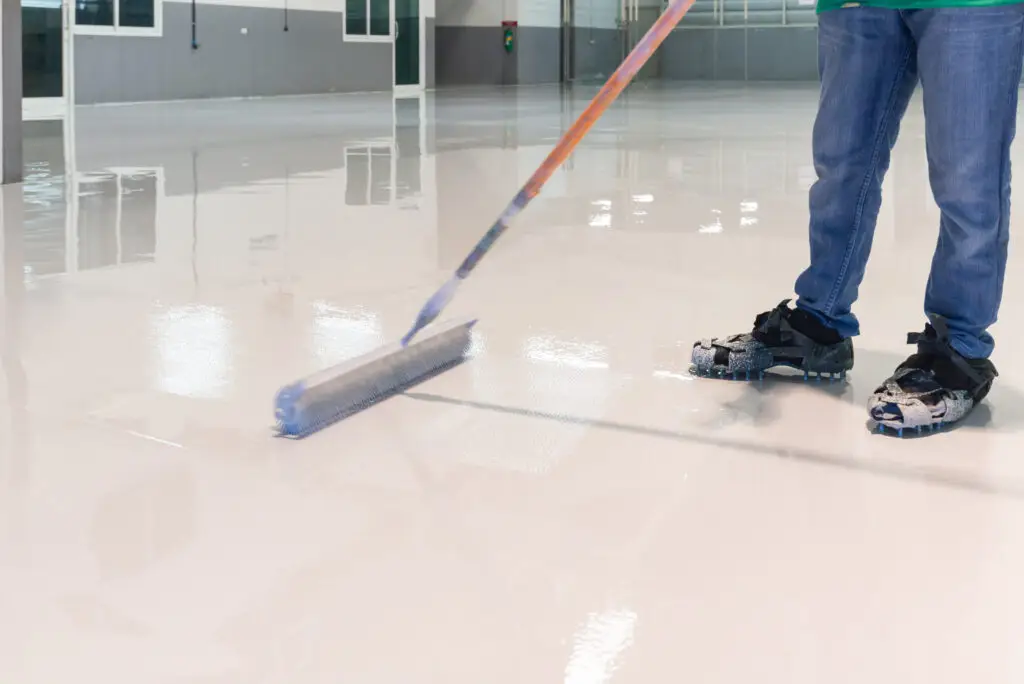
1. Bubbling and Outgassing
Few things are more frustrating than walking onto a freshly coated floor and finding it covered in tiny craters and bubbles. This usually results from outgassing, which occurs when air trapped in the concrete rises through the wet epoxy as the slab warms. Garages are especially prone to this because they often get coated in the morning, and as the day heats up, the concrete releases air right into your fresh coating.
The fix starts with timing and product selection. Apply your coating during stable or falling temperatures rather than during a rapid afternoon warm-up. Proper concrete preparation also opens and then seals the surface in a controlled manner, reducing the amount of air that escapes later. Using a low-viscosity epoxy primer, such as the systems ASTC Global manufactures, allows the primer to penetrate and seal the concrete pores before the topcoat goes down. A quality primer acts as a barrier that dramatically reduces outgassing and gives you a smoother final surface.
2. Peeling and Delamination
When epoxy lifts away from the concrete in sheets or flakes, you have a delamination problem, and it is one of the most expensive failures to repair. Once a floor starts peeling, the only real solution is to grind it back down and start over, which means eating the cost of materials and labor twice.
Delamination almost always comes back to adhesion. If the coating cannot grip the concrete, it will eventually let go. Contamination from oil, grease, sealers, or curing compounds prevents the epoxy from bonding, and so does an overly smooth, polished surface that gives the product nothing to grab onto. The solution is aggressive mechanical preparation combined with a primer engineered for deep penetration. ASTC Global formulates products with strong adhesion properties specifically to ensure contractors achieve a permanent bond rather than a temporary one. Pairing the right primer with proper prep is the single most reliable way to keep your floors locked down for the life of the installation.
3. Soft Spots and Improper Curing
You finish a job, return a few days later, and parts of the floor are still tacky or rubbery. Soft spots and incomplete curing destroy both the appearance and the durability of an epoxy floor, and they often come from mixing errors. Epoxy is a chemical reaction between resin and hardener, and that reaction only completes correctly when the two parts are measured and blended precisely.
Off-ratio mixing, inadequate stirring, and applying the product at temperatures below the recommended range all interfere with the cure. To avoid this, follow the manufacturer’s mix ratios exactly, mix thoroughly, including the sides and bottom of the bucket, and pay attention to the pot life and cure window for the specific product you are using. This is where working with a knowledgeable supplier pays off. ASTC Global provides detailed technical data sheets and guidance on cure time and pot life for every product, so your crew knows precisely how to handle the material under on-site conditions. When you understand the chemistry, soft spots stop being a mystery.
4. Yellowing and Loss of Gloss
A brilliant, glossy floor that turns dull and yellow within months is a common complaint, particularly in spaces that get natural light. Standard epoxy is sensitive to ultraviolet exposure, and UV rays break down the resin over time, causing that telltale amber tint and a chalky, faded surface. For a homeowner who paid for a showroom finish, this is a major disappointment.
The fix is choosing the right product for the environment. For areas exposed to sunlight, a UV-stable topcoat is essential. This is exactly why polyaspartic and polyurethane systems have become so popular for residential work. ASTC Global manufactures advanced polyaspartic and polyurethane coatings that resist yellowing and hold their gloss far longer than conventional epoxy alone. A smart approach is to use epoxy as the build coat and finish with a UV-stable polyaspartic topcoat, giving your clients a floor that stays beautiful for years instead of months.
5. Inconsistent Color and Flake Distribution
Decorative flake floors are a huge seller in residential garages and basements, but uneven flake coverage and blotchy color can make an otherwise solid job look amateur. Clients notice when one corner is dense with flake, and another is bare, or when the color looks streaky under the topcoat.
Consistency comes from quality materials and disciplined technique. Broadcasting flake to refusal, maintaining a steady hand, and keeping a wet edge all matter. So does the quality of the flake and pigment itself. ASTC Global offers a full range of pigments and decorative flakes formulated for uniform color and reliable performance, so what you broadcast on Monday matches what you broadcast next month. When your base products are consistent batch to batch, your finished floors look professional every single time.
The Common Thread Behind Every Fix
If you look closely at these five problems, a pattern emerges. Nearly all of them can be traced to either the quality of the products you use or the way those products interact with concrete and the environment. You can be the most skilled installer in your market, but if your materials are inconsistent or poorly matched to the job, failures will find you.
That is the difference a true manufacturing partner makes. ASTC Global is not a reseller passing along someone else’s chemistry. We have been formulating polyaspartic, polyurethane, epoxy, and polyurea systems in the USA for over three decades, and we engineer our products specifically for durability and real-world performance. Our team helps contractors choose the right primer, build coat, and topcoat for each application, and we back it up with same-day shipping and local pickup in Santa Ana so you are never stalled waiting on materials.
Build Floors That Last With ASTC Global
Your reputation is built one floor at a time, and the products you choose either protect that reputation or put it at risk. By anticipating these five common problems and partnering with a manufacturer who understands the science behind a lasting finish, you set yourself up for fewer callbacks, happier clients, and more referrals.
If you are ready to upgrade the materials behind your residential epoxy work, the team at ASTC Global is here to help. Contact us today or explore our product range online to find the right system for your next project. Let us help you build floors that perform as beautifully as they look.